The future of fashion: Less ‘unnecessary product’, ‘less waste in fabric’
Advertizement
Obsessions
The time to come of mode: Less 'unnecessary product', 'less waste matter in fabric'
Gucci's Alessandro Michele, designer Dries Van Noten, and Lane Crawford president Andrew Keith are among fashion's most song advocates calling for the industry to slow down, produce less, and be more transparent in pricing.

In May, Paris-based designer Dries Van Noten led a coalition of fashion industry professionals calling for a readjustment to the retail calendar. (Photo: Dries Van Noten)
One Monday afternoon in May, in a sunbathed studio in Rome, Gucci creative director Alessandro Michele announced via a virtual press conference that the Italian label planned to reduce its yearly bear witness schedule from 5 – three for women's, ii for men's – to two. The make has already cancelled its spring/summer show in September.
"I don't recall we have enough fourth dimension to listen to ourselves," Michele said, intermittently waving a black fan. "Nosotros should not start over in the same way, breathless, considering it has been too difficult."
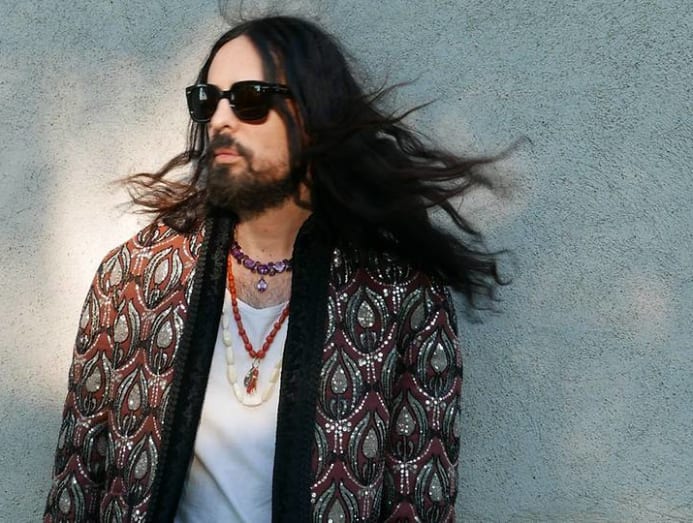
The hope, a spokesperson wrote in a follow-up electronic mail, is to produce fewer, more than focused collections with a "greater emphasis on longevity".
The brand's Pre-autumn and Cruise collections, which refresh the stores with new merchandise over the wintertime holidays and the summertime, will be eliminated, although Gucci may yet produce one-offs, such as collaborations or sheathing collections for Chinese New Year.
READ> Could sharing and renting clothes exist the new fashion norm in Singapore?
The scheme still leaves Gucci with plenty of wriggle room to produce lots of stuff. But the motility towards less – to show less, to produce less – is meaning coming from a brand that has championed, both aesthetically and financially, "more is more than".
Since the date of Michele and principal executive Marco Bizzarri in 2015, Gucci's revenues accept grown from €3.5 billion in 2022 (S$five.5 billion) to €9.six billion, making it one of the world's highest-grossing luxury brands.
"I promise other brands volition follow [our example]," Michele said.
"We should not start over in the same way, incoherent, because information technology has been likewise difficult." – Alessandro Michele
Others are certainly considering it. In contempo weeks, as stores and factories accept closed, and major US retailers such every bit Neiman Marcus and JC Penney take filed for defalcation, members of the fashion manufacture have gathered, via video conference, to propose a reset of how they produce, show and sell collections.
1 coalition, led by designer Dries Van Noten, Lane Crawford president Andrew Keith and Altuzarra principal executive Shira Sue Carmi, published a letter in May calling for a readjustment to the retail agenda, so that collections are sold in alignment with the seasons, and discounted only at the end. The group likewise proposed the industry cut downwards on "unnecessary production" and travel.
A few days before Gucci's printing conference, I spoke with Van Noten, a Paris-based designer whose characterization is function of the Spanish fragrance group Puig, and Keith, of the Hong Kong-based luxury retailer Lane Crawford, on Zoom to discuss why they retrieve the manufacture is in demand of an overhaul.
Lookout man> Meet the woman behind responsible and sustainable mode in Vietnam
FT: Over the by decade, designers have dramatically increased the volume and frequency of new appurtenances via "drops" and collaborations. Are we going to meet those go away?
KEITH: There is very much a place for new, exciting products. We need to stimulate customers, to get products in front of them at the right time, to be more agile within the flavour. [That could hateful] smaller drops or special products for customers in particular regions. Nosotros need to get retail back into a position where it is not relying on discounts as the sole lever [to get customers to buy]. We demand to get customers inspired again.
VAN NOTEN: It'south too nigh respect. It'south non respectful for the customer who buys a winter glaze in September to encounter that the moment it gets wintery, [the coat is discounted] 50 per cent. The client who has a actually strong dearest for way has felt manipulated. The luxury market has looked as well much to fast fashion and the high street.
"It's not respectful for the customer who buys a winter coat in September to encounter that the moment information technology gets wintery, [the coat is discounted] 50 per cent." – Dries Van Noten
FT: If designers want to sell more than at full-toll, do y'all think prices also demand to exist lowered?
KEITH: I of the issues that we have had is that pricing has not necessarily been consequent [across categories], and at that place is an opportunity to exist more transparent. The pricing has to reflect the adroitness and the humanity and creativity that's gone into producing it. Going on sale at the end of the flavour enables people who wouldn't necessarily be able to buy at full price to have access to the products, and it should exist similar that. It's about a balance. I'm not sure a blanket approach to reducing pricing is necessarily the style to go.
FT: Do fashion weeks and fashion shows also need a rethink?
VAN NOTEN: In that location's not going to be a [women's] show in September, we don't accept the budget, it'due south not correct to spend so much money on a show when perchance only 50-100 people can attend [because of social distancing guidelines]. Of class I'g going to miss information technology. I want to go back to that system, simply in a more than sustainable way, considering now we realise nosotros can practise much better. Information technology'due south going to exist actually exciting what we tin practice digitally; maybe in the future it will be a combination of both.
KEITH: The life of the buyer has been pretty horrendous, nosotros're constantly on the road, travelling 150-200 days a year. In that location is definitely an opportunity for usa to do more digitally. [Nevertheless,] if y'all're selling [a collection] to a buyer using Zoom or FaceTime, there'due south going to have to be a combination of [physical] fabric swatches that will make the experience richer.
"The pricing has to reflect the craftsmanship and the humanity and inventiveness that's gone into producing it." – Andrew Keith
FT: 1 way to cut down on travel would be to combine the women's and men'southward fashion weeks.
VAN NOTEN: For me it would be very hard. When we show, we go a lot of responses, positive, negative – we learn from it. We too get commercial input. Combining men's and women's manner weeks would also be technically difficult because nosotros couldn't have all the clients at the aforementioned time. The pre-collections are far less efficient; every make is selling at their ain time, and buyers have to fly five times a season up and down Europe and America to come across collections. Possibly something has to exist done there.
FT: Your letter chosen for "less unnecessary product" and "less waste product in fabric and inventory". Dries, are in that location products that you take made that you would not make over again, because you find them unnecessary?
VAN NOTEN: Of class. Nosotros demand to make clothes that are really us, and that we believe in. At that place is a lot of surplus we could hands remove from collection without cede. The [next] drove volition be smaller, but because we do not have the ability to do [more] financially.
"We demand to make clothes that are actually united states of america, and that we believe in. There is a lot of surplus nosotros could hands remove from collection without cede." – Dries Van Noten
KEITH: As China opens up and customers are coming back to stores, at that place is a change in how people are buying. Customers are looking for pieces that will be in their wardrobes for a while. That'due south going to affect how nosotros edit [our array]. There isn't space for average or medium products.
FT: You lot've published the letter. How do you lot plow the proposal into action?
VAN NOTEN: We tin can promise. We can't force. We aren't going to be the fashion police. It's non an easy year, and side by side year is besides not going to be easy for anybody. All we can do is suggest, and nosotros can start with our own business concern. Maybe we can showtime to create a new normal.
"Customers are looking for pieces that will exist in their wardrobes for a while. That'southward going to affect how we edit [our array]." – Andrew Keith
By Lauren Indvik © 2022 The Financial Times
READ> This eyewear company is making luxury sunglasses from recycled ocean waste

Recent Searches
Trending Topics
Source: https://cnalifestyle.channelnewsasia.com/obsessions/the-future-of-fashion-251351
0 Response to "The future of fashion: Less ‘unnecessary product’, ‘less waste in fabric’"
Postar um comentário